What is a Real Life Example of an API?
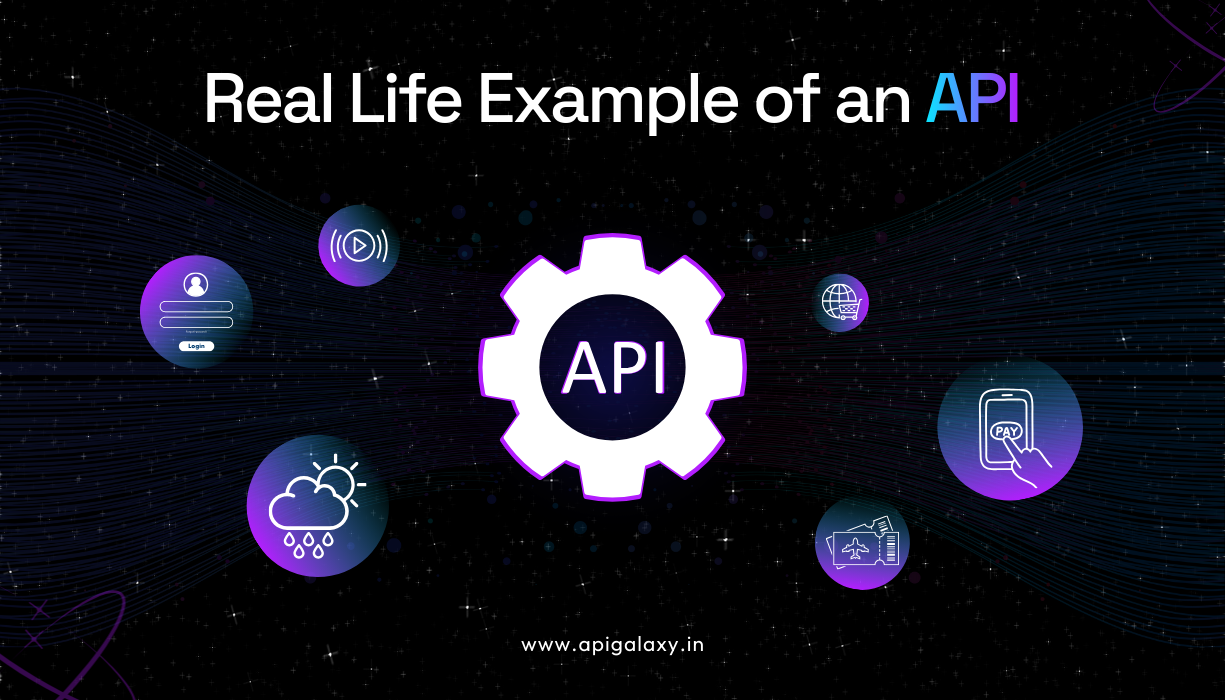
A real life example of an API exists in nearly every digital action you perform — from signing into apps to making online payments or booking travel.
APIs (Application Programming Interfaces) are the hidden bridge that enables software systems to communicate, share data, and work together seamlessly. Every time you log in to a social app, view live weather, or make a transaction, you’re experiencing a real life example of an API in action.
Let’s explore how APIs shape our digital lives through practical examples that businesses and users rely on every single day.
1. Social Media Logins — A Common Real Life Example of an API
When you click “Sign in with Google” or “Log in with Facebook,” you’re interacting with a real life example of an API.
These social media APIs (like Google OAuth or Facebook Graph API) allow one platform to securely verify your identity using another system — without the need to create a new account.
Benefits:
- Faster user onboarding
- Enhanced security
- Simplified multi-platform access
Related: KYC API: 7 Powerful Ways to Transform Onboarding in 2025
2. Weather Apps — APIs That Bring Forecasts to Life
Checking your local weather forecast? That’s another real life example of an API.
Apps like OpenWeatherMap API and AccuWeather API deliver real-time weather updates to your phone, smartwatch, or website by retrieving live data from global meteorological servers.
Benefits:
- Real-time temperature and forecast updates
- Seamless cross-device synchronization
3. Online Travel Booking — APIs in Motion
Websites like Expedia or MakeMyTrip use travel APIs to aggregate flights, hotels, and rental cars into a single dashboard.
Each time you view options across airlines or hotel brands, that’s a real life example of an API combining data from multiple providers to deliver instant results.
Benefits:
- Real-time availability
- Dynamic pricing
- Faster confirmations
Explore: Travel API: Why Slow Bookings Hurt Your Business
4. Navigation and Ride-Sharing — APIs That Move You
Apps like Uber, Ola, and Lyft depend on mapping APIs like Google Maps API or Mapbox to calculate routes, estimate fares, and provide turn-by-turn navigation.
Every time you track your ride in real time, you’re seeing a real life example of an API managing multiple data layers instantly.
Benefits:
- Live location tracking
- Accurate route optimization
- Enhanced user trust
5. Online Payments — APIs That Power Secure Transactions
When you pay for an item using PayPal, Razorpay, or Stripe, the e-commerce platform connects to the payment gateway through APIs.
Each of these transactions is a real life example of an API communicating securely between customer, merchant, and bank.
Benefits:
- Fast, encrypted transactions
- Instant confirmations
- Minimal payment errors
Read Next: Bill Payment API: Why Customers Switch to Faster Competitors
6. Streaming Platforms — APIs That Personalize Experiences
Spotify and Netflix are built around APIs that deliver personalized recommendations, manage playlists, and stream content seamlessly.
Your ability to start a movie on one device and continue on another is yet another real life example of an API in action.
Benefits:
- Personalized experiences
- Smart device integration
- Scalable content delivery
7. E-Commerce — APIs Behind Every Order
Retail platforms like Amazon and Shopify rely on multiple APIs to manage product listings, stock levels, payments, and deliveries.
Each purchase, shipping update, and refund is a real life example of an API working behind the scenes to automate the customer experience.
Also Read: Outdated APIs: A Silent Threat to Your Business
8. Smart Home Devices — APIs That Connect Everything
Voice assistants like Alexa and Google Home use APIs to communicate between your devices and cloud servers.
When you say “Turn off the lights,” it’s a real life example of an API sending that command to your smart bulb.
Benefits:
- Instant device control
- Real-time updates
- IoT ecosystem connectivity
Why Real Life API Examples Matter
A real life example of an API shows how interconnected technology has become. Businesses rely on APIs to:
- Automate workflows
- Scale digital operations
- Improve user satisfaction
- Enhance security and compliance
APIs make digital transformation possible by replacing manual processes with fast, reliable automation.
Final Word
From payments to travel, streaming to smart homes — every real life example of an API proves that APIs are the engine of the digital world.
They power instant communication, real-time processing, and global scalability — all while staying invisible to the end user.
Businesses that leverage APIs aren’t just keeping up; they’re leading the digital revolution.
Partner with API Galaxy to experience enterprise-grade KYC, Recharge, Bill Payment, and Travel APIs — designed for speed, scalability, and success.