TAN Verification often becomes important only after something has already gone wrong. A vendor has been approved, an invoice is ready, and the finance team discovers that the tax identifier in the onboarding form does not match the available record. What looked like a minor typing mistake now sits between procurement, finance, compliance and the vendor-each waiting for someone else to correct it.
This situation is common in growing B2B operations. Payments and procurement may be automated, yet critical tax details still enter systems through emails, spreadsheets and manually completed forms. Those checks become fragile as vendor volumes rise.
For organisations building more dependable onboarding flows, TAN Verification is less about adding another compliance box and more about preventing questionable data from moving silently into downstream workflows. API Galaxy approaches this as an infrastructure problem: validate important business information at the point of entry, keep the response structured and allow the appropriate team to review exceptions.
What a TAN Is and Why It Matters in India
TAN stands for Tax Deduction and Collection Account Number. The Income Tax Department describes it as a 10-digit alphanumeric number issued to persons responsible for deducting tax at source or collecting tax at source. In practical system terms, it is a 10-character alphanumeric identifier connected with TDS and TCS processes.
The Income Tax Department’s official TAN FAQ explains that TAN generally needs to be quoted in prescribed TDS or TCS returns, payment challans, certificates and relevant communications, while also noting specific situations in which PAN may be quoted instead. Businesses should therefore assess their actual obligations using current official guidance or qualified professional advice.
A vendor is not automatically required to have a TAN merely because it sells goods or services. It is relevant when the entity is responsible for deducting or collecting tax at source under applicable rules. Asking every vendor for it without context can create unnecessary friction.
When the identifier is relevant, TAN Verification helps the onboarding team check whether the submitted value corresponds with the available TAN record before it is reused in tax-related workflows. API Galaxy can be considered alongside related services such as its PAN Verification API, GST Verification API and CIN Verification API when a business needs a broader view of vendor data.
What a TAN Verification API Actually Does
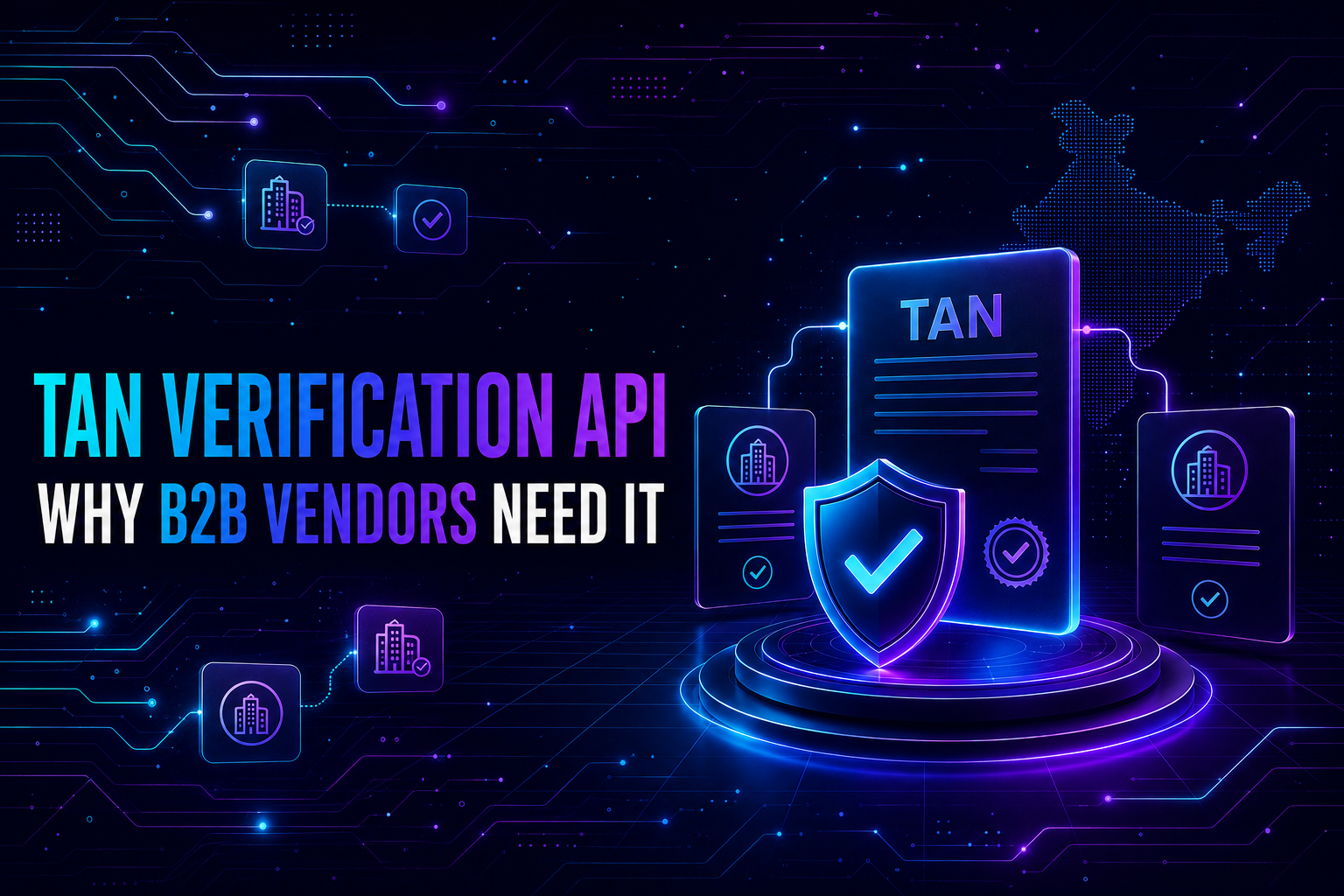
A TAN Verification API allows an application to validate a submitted TAN within an integrated workflow and receive a structured response. Response fields, source coverage and update frequency can differ, so buyers should verify the provider’s documentation.
What TAN Verification Can and Cannot Confirm
At a practical level, the check can help determine whether the submitted identifier is valid against the connected verification source and whether the returned information is consistent with the vendor data being reviewed. It may also help a system separate clear matches from cases that require manual attention, depending on the available response.
It does not prove that a vendor has filed every return, paid every tax liability, supplied genuine invoices or complied with every applicable law. It does not replace due diligence, contracts, tax review or professional advice. This boundary is important because a successful API response should never be presented internally as complete proof of tax compliance.
The Income Tax Department’s Know TAN Details service allows registered and unregistered users to view basic and Assessing Officer details using a deductor name or TAN. For companies processing records at scale, API Galaxy offers a way to bring verification into a controlled digital journey rather than depending entirely on repeated manual lookups.
Why B2B Vendor Onboarding Needs TAN Verification
Vendor onboarding is no longer owned by one desk. Procurement collects information, compliance reviews it, finance configures payment and tax treatment, and technology teams maintain the system. One incorrect identifier can travel through every function unnoticed.
TAN Verification introduces an early checkpoint. Instead of discovering a problem when a certificate, statement or payment-related process is being prepared, the organisation can check the submitted value while the vendor is still completing onboarding. API Galaxy can support this kind of embedded verification without asking every internal user to move between separate portals and spreadsheets.
This is particularly useful for marketplaces, staffing companies, large employers, procurement platforms, accounting software providers, fintech products and enterprises managing substantial vendor networks. The benefit is not that an API “solves compliance.” The real benefit is more modest and useful: it helps teams detect data issues earlier and route uncertain cases for review.
For procurement teams, the check also creates consistency. The same rule can be applied at the same stage for every relevant vendor, reducing dependence on individual reviewers. API Galaxy’s structured approach can fit into a vendor portal, internal dashboard or backend service.
Common TAN Errors That Disrupt B2B Workflows
Most problems are ordinary operational mistakes: a mistyped character, an old identifier, the wrong group entity or a legal-name mismatch between systems.
| Vendor-Onboarding Issue | Possible Business Impact | How API-Based Verification Helps |
|---|---|---|
| A letter or number is typed incorrectly | Review, payment or tax-processing delays | Flags an invalid or unmatched input before it moves further |
| TAN belongs to another entity in the group | Incorrect vendor mapping and reconciliation effort | Helps teams compare the returned record with the entity being onboarded |
| Old data is copied from a spreadsheet | Repeated errors across systems | Adds a fresh check at the point of submission |
| Legal name and submitted record do not align | Manual follow-up between procurement and finance | Routes the case for document or human review |
| TAN is requested when it is not applicable | Vendor confusion and unnecessary data collection | Encourages a conditional workflow based on the vendor’s role |
In practice, TAN Verification works best as one layer within a wider control system. API Galaxy’s Business Verification APIs can help teams think beyond a single field by connecting relevant PAN, GST, CIN or other checks to the onboarding scenario. Each check should still have a defined purpose and a clear review rule.
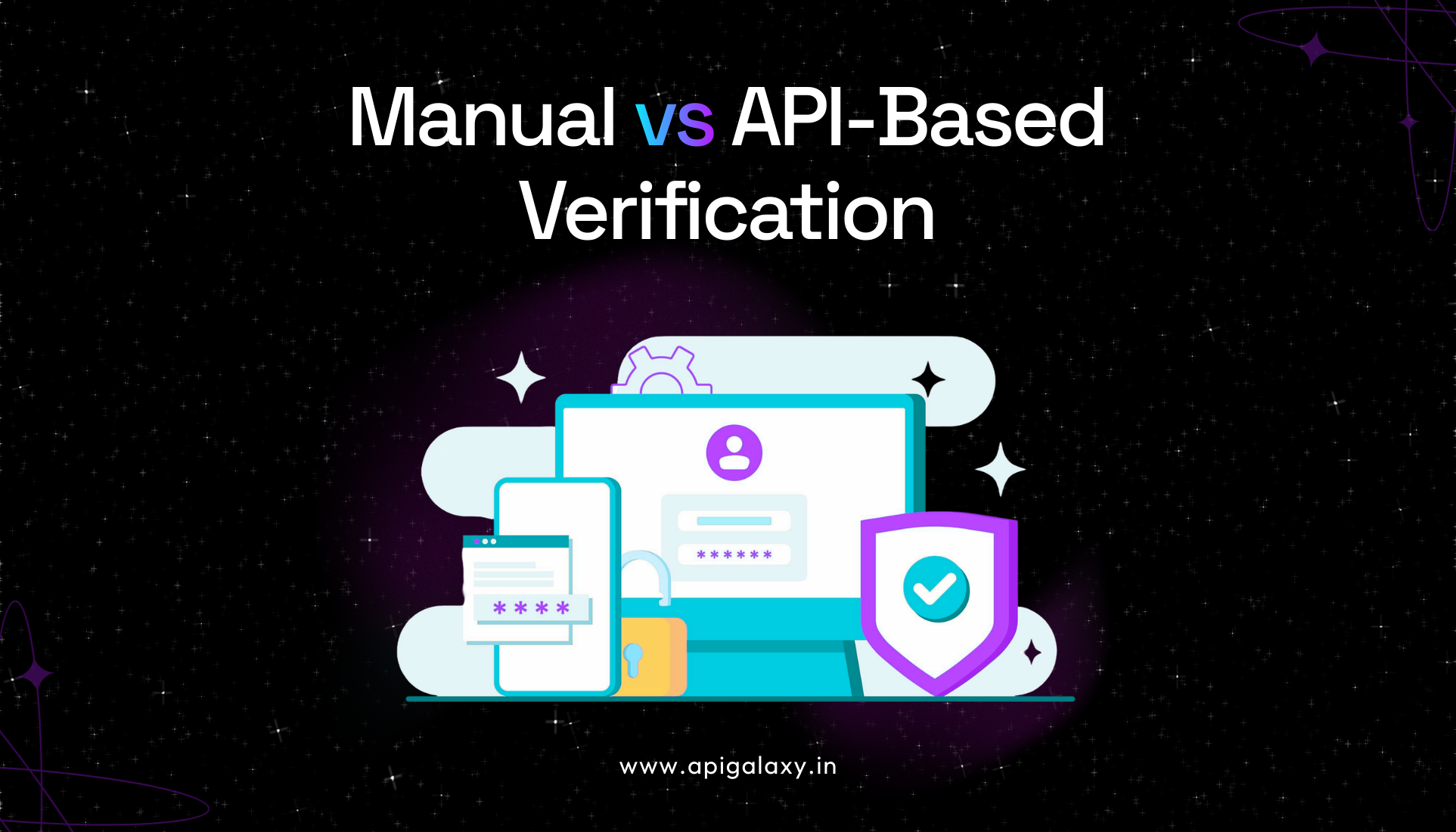
Manual Checking Versus API-Based Verification
Manual checking can be reasonable for a small organisation onboarding only a few vendors. A reviewer can use official services and investigate unusual cases.
The weakness appears at scale. Reviewers may follow different steps, skip a lookup under pressure or fail to record what was checked. A sound policy can then produce inconsistent evidence.
API-based TAN Verification is useful when the same rule must be applied repeatedly. A system can validate the input at a defined stage, store the permitted result for an appropriate period and send exceptions to an authorised reviewer. API Galaxy can support that consistency, but the business still needs policies for consent, access, retention, escalation and correction.
The TRACES portal remains an official system for managing TDS and TCS accounts and related functions. An API integration should complement-not misrepresent or replace-official filing, reconciliation and compliance processes.
How to Add TAN Verification Without Making Onboarding Heavier
The best workflow is quiet: a vendor enters the detail once, the system checks it, and only unclear cases reach a human reviewer.
A Practical TAN Verification Workflow
- Ask whether TAN is relevant to the entity and transaction before making the field mandatory.
- Collect the identifier through a secure form with a clear purpose statement.
- Validate basic input format before sending an API request.
- Run TAN Verification and compare the permitted response with the vendor record.
- Route mismatches, unavailable responses or uncertain cases for authorised review.
- Record the outcome according to internal retention and access policies.
- Recheck information when a material vendor detail changes or policy requires it.
API Galaxy can be integrated at the stage that fits the product: initial registration, finance approval or pre-activation review. Developers should also plan for timeouts, unavailable responses, retries and manual fallback. A reliable onboarding journey cannot assume that every external dependency will answer successfully every time.
Good user experience matters. A generic “verification failed” message gives a genuine vendor little direction. API Galaxy provides infrastructure, while the business remains responsible for clear wording, decision logic and support.
Choosing the Right API Provider for Business Verification
Search phrases such as Best API Provider in India or Best Verification API Provider in India may produce long vendor lists, but a ranking claim is less useful than evidence. Teams should examine data sources, allowed use cases, security practices, documentation quality, error handling, support, rate limits, service commitments and commercial terms.
The phrase Top Identity Verification API Providers in India also requires caution in this context. TAN is a tax account identifier, not a personal identity document. A provider may offer both individual and business checks, but the product category and purpose should remain clear. API Galaxy separates Individual Verification APIs from Business Verification APIs so teams can assess the relevant suite instead of treating every identifier as the same type of check.
Before integration, ask what a successful response means, which fields may be returned, how unavailable results appear and what logs are retained. API Galaxy should be assessed against these same questions.
A company seeking the Best API Provider in India should test documentation, failure states and escalation support. Evaluating the Best Verification API Provider in India should involve security and operational fit-not only successful demo requests.
When comparing the Top Identity Verification API Providers in India, buyers should separately assess business-verification coverage. API Galaxy’s ecosystem includes PAN, GST, CIN and TAN-related capabilities for workflows needing multiple relevant checks. More data does not automatically mean better verification.
Conclusion: Reliable Data Before Financial Work Begins
The real value of TAN Verification is catching a small mismatch before it becomes a larger coordination problem for finance, procurement, compliance and the vendor.
For organisations managing repeatable B2B workflows, API Galaxy can help place that check inside the systems employees already use. Its role is to support structured, scalable verification infrastructure; the organisation must still interpret the result carefully and follow current tax, legal and data-protection requirements.
TAN Verification should therefore be treated as a focused data-quality control-not a declaration that an entity is fully compliant or risk-free. When the check is used at the right point, with a clear fallback and responsible review, vendor onboarding becomes calmer, more consistent and easier to operate as the business grows.
To reduce data mismatches during vendor onboarding, read our guide: PAN Verification Errors: 5 Smart Ways to Avoid Them.